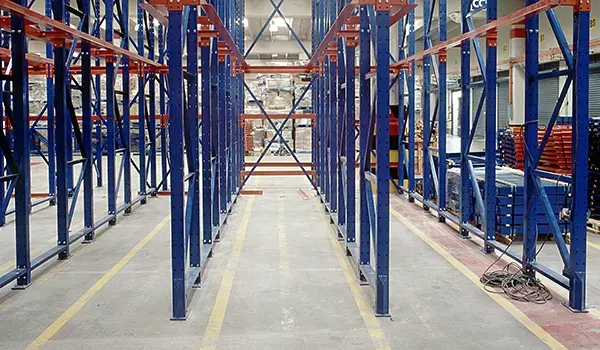
- Few SKUs with many pallets each
- Low or batch turnover
- You need the most positions on the least floor area
- Many different SKUs → Selective Rack
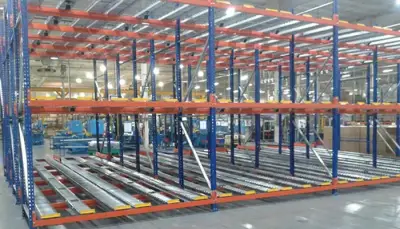
- Strict FIFO with front unloading → Pallet Flow Rack
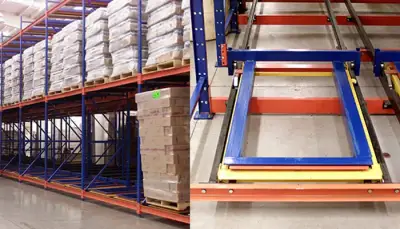
- You want density without driving the forklift into the rack → Push Back
Key benefits
- Aisles eliminated
The warehouse is used to the fullest because the aisles between racks disappear.
- Control of inputs and outputs
Strict management per tunnel; last in, first out (LIFO) in drive-in.
- Low maintenance
Robust structure with support rails and entry guides.
- Compatible with protection accessories
Upright protectors, forklift guides and stops.
Make the most of the warehouse
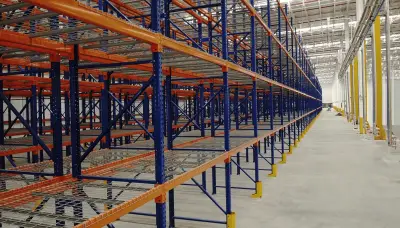
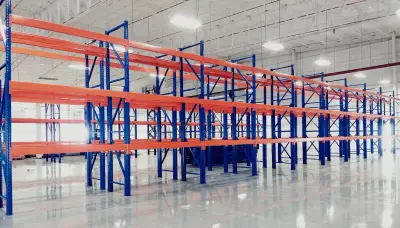
A system designed for lower-turnover products: the warehouse is used to the fullest because the aisles are removed entirely. There are two ways to manage the load: the drive-in system, with a single access aisle, and the drive-thru system, with two load accesses, one on each side of the rack.
How it works
The pallets rest on continuous rails along the tunnel. The forklift drives into the rack, places the pallet in the deepest available position and backs out. In drive-in, the last pallet in is the first out; in drive-thru, loading and unloading happen on opposite sides.
How it is configured
- Frames from 72″ to 396″ high with support rails per level.
- Tunnels sized for your forklift and your pallet.
- Entry guides, upright protectors and signage to NOM-006-STPS and NOM-026-STPS.
Manufacturing process
- 01Design and configuration
Load capacity, product dimensions, operating dynamics and available space.
- 02Manufacturing and finishes
In-plant production with finishes that resist the working environment.
- 03Installation and accessories
Correct assembly, safety accessories and periodic maintenance.
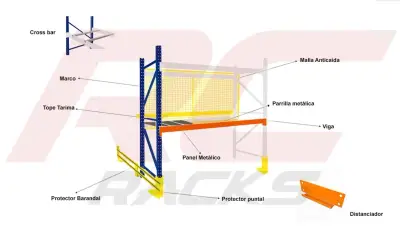
System components
Frequently asked questions
What is the difference between drive-in and drive-thru?
The drive-in has a single access aisle and works LIFO; the drive-thru has two accesses, one on each side, and allows FIFO: loaded from one side and unloaded from the other.
What care does the operation require?
Entry guides, upright protectors and operator training: the forklift moves inside the structure, so NOM-006-STPS requires signage and protection.
Which products suit a drive-in?
Few SKUs with many pallets per SKU and lower turnover. Each tunnel is dedicated to a single SKU because the last pallet in is the first one out.